The Curries

The Curries
Keith and Patricia

Tuesday, June 8, 2010

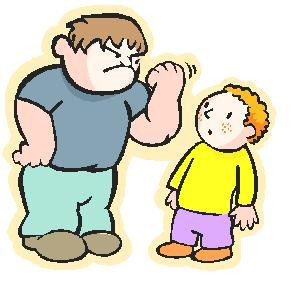
TRAINING: Say goodbye to bullies! Part 1

Are we training our kids to be victims? Or are we training them to be “more than conquerors”?
I think we are training them to be victims far too often.

I have read that as much as 90% of “bullying” is words. Just words. All of us have been hurt by words somewhere along the way, but I dare say that we have allowed ourselves to be hurt by them more than we should. When my feelings were hurt in second grade, my dad taught me this little ditty: “Sticks and stones may break my bones but words will never hurt me.”

 I went back to school the next day ready for the words, whatever they were. I had a shield; when the sharp arrows flew, I held up my shield—“Sticks and stones. . .” I felt brave like a warrior.

We have been taught that Christians are nice and sweet, that we do not retaliate, that we turn the other cheek, that we do not fight. We work hard as parents to speak kindly to our own children (as much as possible). Then when someone else speaks words that hurt our little guys, we are ready to deal with the bully! Call the parents, call the teacher, call the principal; and if all else fails, call the psychiatrist.

Instead of teaching our kids to stand up, we teach them to come to us and we will fix their problems. Instead of equipping them, we handicap them. We teach them to fear; we teach them that they cannot handle situations without us. We teach them by what we do.

Perhaps we should teach them to respond with courage according to what is right.

When John the Baptist saw the Pharisees coming to the Jordan River, he called them a brood of snakes. I wonder how he would have done on the playground in our modern schools. Jesus called the Pharisees hypocrites, blind guides, blind fools, whitewashed walls, snakes, vipers, and condemned to hell. Was Jesus a bully? Was Jesus being Christlike? How could he say such things?

What we teach our kids to do is the key. We should teach our kids that saying hurtful things is wrong and does not honor the Lord. We should also teach our kids how to respond if others are being hurtful. The Pharisees were hurting the people; John and Jesus called it like it was.

When bullies show up, fear is not God’s plan for us, nor for our children. Our kids need a different attitude.

How about this? Isaiah 43:1 "Fear not, for I have redeemed you; I have summoned you by name; you are mine.”

Equip them with God’s word and equip them with a practical strategy, such as my dad gave me. Here’s another strategy: Smile, look the bully in the eye, and say, “It’s a free country; believe what you want.” Then walk away.
Practice this at home. Practice, practice, practice. Telling your child to do this is not enough. Practice.

Monday, May 31, 2010

Thoughts on Memorial Day

Do you have a Memorial Day tradition? Should you? What is it all about?

We are not just launching summer fun; we are celebrating something deep and foundational. We are being asked to have a moment of silence at 3:00 p.m. on Memorial Day to remember those who have given their lives to protect our freedoms.

Silence is not enough. Our children cannot benefit from our silence. When you gather to eat, perhaps your celebration could include these short ideas as part of the blessing of the meal. Here are some thoughts that include the history of Memorial Day as well as the Gettysburg Address (only 276 words). We believe that our gatherings can be enriched by our efforts.

MEMORIAL DAY
The roots of Memorial Day go back to the Civil War. Over 600,000 soldiers died in that conflict affecting every town, village, and family in the United States. After the war ended, almost everyone would travel and decorate the graves of those who had given their lives. “Memorial Day was officially proclaimed on 5 May 1868 by General John Logan, national commander of the Grand Army of the Republic and was first observed on 30 May 1868.” (http://www.usmemorialday.org/backgrnd.html)

To date, including all the wars our country has fought, over 1.2 million Americans have died in defense of the freedoms that we enjoy.

The Gettysburg Address delivered by Abraham Lincoln in 1863 was to commemorate those who died on that particular battlefield. Although it was written a few years before Memorial Day was established, it expresses best what Memorial Day represents.

THE
GETTYSBURG
ADDRESS

Fourscore and seven years ago our fathers brought forth
 on this continent a new nation, conceived in liberty, and
 dedicated to the proposition that all men are created equal.

  Now we are engaged in a great civil war, testing
 whether that nation, or any nation so conceived and so
 dedicated, can long endure. We are met on a great battle-
field of that war. We have come to dedicate a portion of
 that field as a final resting-place for those who here gave
 their lives that that nation might live. It is altogether
 fitting and proper that we should do this.

  But, in a larger sense, we cannot dedicate…we cannot
 consecrate…we cannot hallow…this ground. The brave men,
 living and dead, who struggled here, have consecrated it
 far above our poor power to add or detract. The world
 will little note nor long remember what we say here, but
 it can never forget what they did here.
 
It is for us, the  living, rather, 
to be dedicated here to the unfinished
 work which they who fought here have thus far so nobly
 advanced. It is rather for us to be here dedicated to the
 great task remaining before us…that from these honored
 dead we take increased devotion to that cause for which
 they gave the last full measure of devotion; that we here
 highly resolve that these dead shall not have died in vain;
 that this nation, under God, shall have a new birth of
 freedom; and that government of the people, by the people,
 for the people, shall not perish from the earth.

November 19, 1863